
Many small and medium-sized businesses set annual sales targets but struggle to manage the sales process consistently enough to achieve them.
Whether you are a business owner, founder, sales manager, or salesperson, understanding how to manage your sales pipeline, activity levels, and follow-up discipline is what ultimately determines performance.
The goal isn’t usually the problem. The management of the goal is.
By February, most companies have decided what they want from the year. Revenue targets are set. Growth expectations are clear.
The real question is: Is the sales process structured well enough to support that target?
In most SMEs, missed targets don’t come from poor ambition.
They come from small gaps in sales process management.
None of this feels dramatic in isolation. But over six months, it compounds. Sales performance is not only about strategy. It’s about weekly execution.
If you want to hit your sales target in 2026, you need to translate revenue into activity.
Let’s make this practical.
If your annual target is R12 million and your average deal size is R100,000, you need 120 deals per year — 10 per month.
Now add conversion.
If you close one in four qualified opportunities, you need 40 solid opportunities per month. If half your first meetings convert into qualified opportunities, you need roughly 80 meaningful first conversations per month.
That is sales process management. It’s no longer “we need to grow”. It’s:
Most small businesses skip this step. Without it, activity rarely matches ambition.
Revenue is a lagging indicator. Pipeline health and activity levels are leading indicators.
If you only review sales at month-end or quarter-end, you are reacting too late. Effective sales pipeline management requires weekly visibility.
At a minimum, every week you should be reviewing:
This does not require expensive CRM software. A structured spreadsheet can work. But it does require discipline.
If you are a founder managing your own sales, block time weekly to review these numbers properly. Not a glance. A structured review.
If you manage a sales team, ensure your pipeline meeting focuses on deal reality — not storytelling. Ask:
Vague answers indicate weak deals. And weak pipeline visibility leads to missed sales targets.
Prospecting Discipline: The Engine of Sales Performance
Most businesses that struggle with sales performance don’t have a closing problem. They have a prospecting consistency problem.
Prospecting gets squeezed out by operations, admin, and internal meetings. But if your numbers require 80 first conversations per month and you are generating 40, the issue is structural.
Sales process management requires protecting prospecting time.
If you are responsible for new business:
If you manage a sales team:
When activity drops, revenue drops — just with a delay.
Another major weakness in sales performance management is poor follow-up discipline.
Deals rarely collapse dramatically. They stall quietly.
These small breakdowns reduce conversion rates. Strong sales process management includes:
Conversion improvement often comes from tightening follow-up rather than changing pricing or messaging.
In small and medium-sized businesses, the sales structure is often informal. Founders wear multiple hats. Sales managers get pulled into operations. Salespeople operate with limited oversight.
That makes process management even more important.
The earlier you detect a drop in activity or pipeline quality, the easier it is to correct. Waiting until Q2 or Q3 to react creates unnecessary pressure.
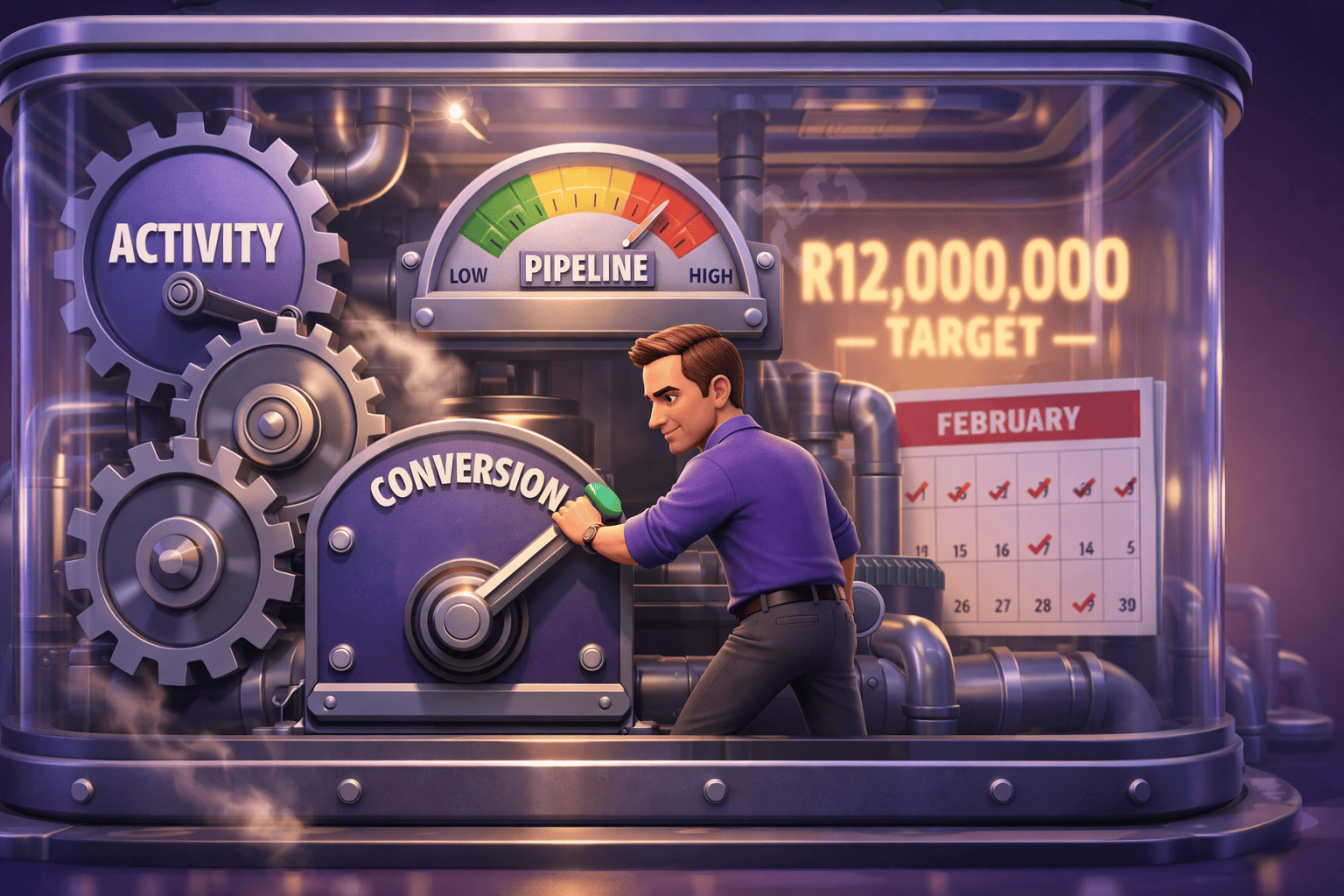
If by the end of February your numbers show you are behind, there are only three levers available:
Activity is usually the fastest lever. Sales performance improves when adjustments are made early — not when panic sets in later.
This is the discipline that separates consistent growth businesses from reactive ones.
In most SMEs, the gap between achieving and missing a sales target is not massive.
It’s found in:
Small management decisions, repeated weekly.
That’s sales process management.
And February is usually the month where those habits either get embedded — or ignored. Your sales goal for 2026 is probably set.
The real question is whether the system behind it is strong enough to support it. Because sales performance rarely improves because people work harder.
It improves when the process is led properly.


2025 © All rights reserved | Developed By Ever Digital
