In this comprehensive guide, we'll explore five cutting-edge sales strategies that have been proven to drive remarkable results. These approaches are designed to help you navigate the complexities of modern sales, enhance your team's performance, and ultimately skyrocket your revenue. By implementing these strategies, you'll be well-positioned to outpace your competitors and achieve unprecedented growth in the coming years.From leveraging advanced technologies to refining your sales process and nurturing customer relationships, these strategies encompass a holistic approach to sales excellence. Whether you're a seasoned sales professional or a business owner looking to optimise your sales operations, this article will provide you with actionable insights and practical techniques to elevate your sales game.Let's dive into the world of next-generation sales strategies and discover how you can transform your revenue trajectory for 2025 and beyond.
1. Embrace Data-Driven Decision Making
In the rapidly evolving sales landscape of 2025, the ability to harness the power of data will be a game-changer for organisations seeking to optimise their sales strategies. Embracing data-driven decision making is no longer a luxury but a necessity for businesses aiming to stay competitive and drive revenue growth.
Leveraging Advanced Analytics
To truly capitalise on the wealth of data available, sales teams must go beyond basic reporting and embrace advanced analytics. This involves utilising sophisticated tools and techniques to extract meaningful insights from complex datasets. By implementing predictive analytics, for instance, sales managers can forecast future trends, identify potential opportunities, and anticipate customer needs with remarkable accuracy.Consider the following ways to leverage advanced analytics:
Customer segmentation: Use clustering algorithms to group customers based on behaviour, preferences, and purchasing patterns.
Churn prediction: Employ machine learning models to identify customers at risk of leaving and take proactive measures to retain them.
Sales forecasting: Utilise time series analysis and regression models to predict future sales volumes and revenue.
Lead scoring: Develop AI-powered systems to rank leads based on their likelihood to convert, allowing sales teams to prioritise their efforts effectively.
Implementing a Robust Data Infrastructure
To fully embrace data-driven decision making, organisations must invest in a robust data infrastructure. This includes:
Data warehousing: Centralise data from various sources into a single, accessible repository.
Data quality management: Implement processes to ensure data accuracy, completeness, and consistency.
Data governance: Establish policies and procedures for data usage, security, and compliance.
Real-time data processing: Utilise stream processing technologies to analyse data as it's generated, enabling rapid decision-making.
By building a solid data foundation, sales teams can trust the insights they derive and make confident decisions based on reliable information.
Fostering a Data-Driven Culture
Implementing the right tools and infrastructure is only part of the equation. To truly succeed in data-driven decision making, organisations must foster a culture that values and prioritises data. This involves:
Training and upskilling: Provide comprehensive training to sales teams on data analysis techniques and tools.
Data literacy programmes: Develop initiatives to improve data literacy across the organisation, ensuring everyone understands the importance of data-driven decisions.
Leadership buy-in: Secure support from top management to drive the adoption of data-driven practices throughout the company.
Performance metrics: Align key performance indicators (KPIs) with data-driven goals to incentivise the use of data in decision-making processes.
By cultivating a data-driven culture, organisations can ensure that insights derived from data are consistently applied to improve sales strategies and drive revenue growth.
Personalising Customer Interactions
One of the most powerful applications of data-driven decision making in sales is the ability to personalise customer interactions at scale. By analysing customer data, sales teams can tailor their approach to each prospect's unique needs, preferences, and pain points. This level of personalisation can significantly improve conversion rates and customer satisfaction.
Consider implementing the following personalisation strategies:
Dynamic content: Use data to customise email campaigns, website content, and product recommendations based on individual customer profiles.
Behavioural triggers: Set up automated responses to specific customer actions, such as abandoned carts or product views, to re-engage prospects at critical moments.
Personalised pricing: Develop data-driven pricing models that take into account individual customer value, purchase history, and market conditions.
Targeted outreach: Use data insights to identify the most effective channels and timing for reaching out to different customer segments.
By leveraging data to personalise interactions, sales teams can create more meaningful connections with prospects and drive higher conversion rates.
In 2025, the organisations that fully embrace data-driven decision making in their sales strategies will be best positioned to thrive in an increasingly competitive marketplace. By leveraging advanced analytics, implementing robust data infrastructure, fostering a data-driven culture, and personalising customer interactions, businesses can unlock new levels of sales performance and revenue growth.
2. Optimise Your Sales Funnel
In the fast-paced world of sales, having a well-optimised funnel is crucial for maximising conversions and driving revenue growth. In 2025, the importance of a streamlined and effective sales funnel cannot be overstated. By focusing on optimising each stage of the funnel, organisations can significantly improve their sales performance and achieve remarkable results.
Mapping the Customer Journey
The first step in optimising your sales funnel is to gain a deep understanding of your customer's journey. This involves mapping out every touchpoint and interaction a prospect has with your brand, from initial awareness to the final purchase decision. By creating a comprehensive customer journey map, you can identify potential bottlenecks, areas of friction, and opportunities for improvement.
Consider the following steps when mapping your customer journey:
Identify key stages: Break down the journey into distinct phases, such as awareness, consideration, evaluation, and decision.
Define touchpoints: List all the ways customers interact with your brand at each stage, including website visits, social media engagements, email communications, and sales calls.
Analyse customer behaviour: Use data analytics to understand how customers move through each stage and what factors influence their decisions.
Gather feedback: Conduct surveys and interviews with customers to gain insights into their experiences and pain points.
By thoroughly mapping the customer journey, you can gain valuable insights that will inform your funnel optimisation efforts.
Streamlining the Top of the Funnel
The top of the funnel is where you attract and engage potential customers. To optimise this crucial stage, focus on:
Content marketing: Develop high-quality, relevant content that addresses your target audience's pain points and interests. This can include blog posts, whitepapers, webinars, and social media content.
Search engine optimisation (SEO): Implement robust SEO strategies to improve your visibility in search engine results and drive organic traffic to your website.
Paid advertising: Utilise targeted advertising campaigns across various platforms to reach your ideal customers and generate qualified leads.
Social media engagement: Build a strong presence on relevant social media platforms to increase brand awareness and foster meaningful connections with potential customers.
Lead magnets: Create valuable resources, such as e-books or templates, that prospects can access in exchange for their contact information.
By optimising the top of your funnel, you can ensure a steady flow of high-quality leads entering your sales pipeline.
Nurturing Leads in the Middle of the Funnel
The middle of the funnel is where you nurture leads and guide them towards a purchase decision. To optimise this stage:
Implement lead scoring: Develop a system to rank leads based on their likelihood to convert, allowing your sales team to prioritise their efforts effectively.
Personalised email campaigns: Create targeted email sequences that provide valuable information and address specific pain points based on each lead's characteristics and behaviour.
Retargeting: Use retargeting ads to re-engage leads who have shown interest but haven't yet converted.
Educational content: Provide in-depth resources, such as case studies and product comparisons, to help leads evaluate your offerings.
Automated workflows: Set up automated nurturing sequences that deliver the right content at the right time based on lead behaviour and engagement.
By effectively nurturing leads in the middle of the funnel, you can increase the likelihood of conversion and shorten the sales cycle.
Closing Deals at the Bottom of the Funnel
The bottom of the funnel is where leads make their final decision to purchase. To optimise this critical stage:
Personalised demos: Offer tailored product demonstrations that address each prospect's specific needs and use cases.
Social proof: Leverage customer testimonials, case studies, and reviews to build trust and credibility.
Urgency and scarcity: Create a sense of urgency by offering limited-time promotions or highlighting product scarcity.
Objection handling: Develop comprehensive resources and training to help sales reps effectively address common objections.
Seamless purchasing process: Streamline the buying process to make it as easy and frictionless as possible for customers to complete their purchase.
By optimising the bottom of the funnel, you can increase your close rates and maximise revenue from qualified leads.
Continuous Improvement and Testing
Optimising your sales funnel is an ongoing process that requires continuous monitoring, testing, and refinement. Implement the following practices to ensure your funnel remains effective:
A/B testing: Regularly test different elements of your funnel, such as landing page designs, email subject lines, and call-to-action buttons, to identify the most effective approaches.
Funnel analytics: Use advanced analytics tools to track key metrics at each stage of the funnel and identify areas for improvement.
Customer feedback loops: Regularly solicit feedback from customers and lost prospects to gain insights into their experiences and identify potential issues.
Cross-functional collaboration: Foster collaboration between sales, marketing, and customer success teams to ensure a cohesive and optimised customer experience throughout the funnel.
Competitive analysis: Stay informed about industry trends and competitor strategies to ensure your funnel remains competitive and effective.
By embracing a culture of continuous improvement and testing, you can ensure that your sales funnel remains optimised and continues to drive revenue growth in 2025.
Optimising your sales funnel is a critical strategy for boosting revenue and achieving sales success in the coming years. By mapping the customer journey, streamlining each stage of the funnel, and committing to continuous improvement, organisations can create a powerful engine for growth and outperform their competitors in 2025.
3. Leverage Artificial Intelligence and Machine Learning
In 2025, the integration of Artificial Intelligence (AI) and Machine Learning (ML) in sales strategies is no longer a futuristic concept but a present-day necessity. These cutting-edge technologies have the potential to revolutionise the way sales teams operate, offering unprecedented insights, automation capabilities, and personalisation opportunities. By leveraging AI and ML effectively, organisations can significantly enhance their sales performance and drive substantial revenue growth.
Predictive Lead Scoring and Prioritisation
One of the most impactful applications of AI and ML in sales is predictive lead scoring. This advanced technique uses historical data and machine learning algorithms to assess the likelihood of a lead converting into a customer. By analysing various factors such as demographic information, behavioural data, and engagement metrics, AI-powered systems can assign accurate scores to leads, allowing sales teams to prioritise their efforts more effectively.
Key benefits of predictive lead scoring include:
Improved efficiency: Sales reps can focus their time and energy on the most promising leads, increasing overall productivity.
Higher conversion rates: By targeting high-quality leads, sales teams can achieve better conversion rates and close more deals.
Shorter sales cycles: Identifying the most qualified leads early in the process can help streamline the sales cycle and reduce time-to-close.
Data-driven decision making: Sales managers can make more informed decisions about resource allocation and strategy based on AI-generated insights.
To implement predictive lead scoring effectively:
Gather comprehensive data: Ensure you have access to a wide range of data points about your leads and customers.
Choose the right AI platform: Select a robust AI-powered CRM or dedicated lead scoring tool that aligns with your specific needs.
Continuously refine the model: Regularly update and retrain your predictive models to maintain accuracy as market conditions and customer behaviours evolve.
AI-Powered Sales Assistants and Chatbots
AI-powered sales assistants and chatbots are becoming increasingly sophisticated, offering valuable support to both sales teams and customers. These intelligent systems can handle a wide range of tasks, from answering basic customer queries to providing personalised product recommendations and even assisting with the sales process itself.
Key applications of AI-powered assistants in sales include:
24/7 customer support: Chatbots can provide round-the-clock assistance, answering frequently asked questions and addressing simple customer concerns.
Lead qualification: AI assistants can engage with website visitors, gather initial information, and qualify leads before handing them off to human sales reps.
Meeting scheduling: Intelligent scheduling assistants can coordinate and book meetings between sales reps and prospects, eliminating the back-and-forth of manual scheduling.
Sales process automation: AI can automate repetitive tasks such as data entry, follow-up reminders, and basic email communications, freeing up sales reps to focus on high-value activities.
To maximise the benefits of AI-powered assistants:
Invest in natural language processing (NLP) capabilities to ensure smooth and natural interactions with customers.
Integrate AI assistants with your CRM and other sales tools to maintain a seamless flow of information.
Regularly analyse interactions and feedback to improve the AI's performance and effectiveness.
Personalised Content and Recommendations
AI and ML technologies excel at analysing vast amounts of data to identify patterns and make personalised recommendations. In the context of sales, this capability can be leveraged to deliver highly targeted content and product suggestions to prospects and customers.
Examples of AI-driven personalisation in sales include:
Dynamic website content: Adjust website content, product displays, and offers based on individual visitor characteristics and behaviour.
Personalised email campaigns: Tailor email content, subject lines, and send times to maximise engagement for each recipient.
Product recommendations: Suggest relevant products or services based on a customer's purchase history, browsing behaviour, and similarities to other customers.
Content curation: Deliver personalised content experiences, such as tailored blog post recommendations or customised resource libraries, to nurture leads effectively.
Collect and centralise customer data from various touchpoints to create comprehensive profiles.
Utilise machine learning algorithms to identify patterns and preferences in customer behaviour.
Implement A/B testing and continuous optimisation to refine personalisation strategies over time.
Predictive Sales Forecasting
Accurate sales forecasting is crucial for effective resource allocation, inventory management, and strategic planning. AI and ML technologies can significantly enhance the accuracy and reliability of sales forecasts by analysing historical data, market trends, and a wide range of external factors.
Ensure access to high-quality, comprehensive historical sales data.
Incorporate external data sources, such as economic indicators and industry trends, to enhance forecast accuracy.
Regularly validate and refine forecasting models based on actual results and changing market conditions.
Sentiment Analysis and Customer Insights
AI-powered sentiment analysis tools can help sales teams gain deeper insights into customer attitudes, preferences, and pain points. By analysing customer interactions across various channels, including social media, emails, and support tickets, these tools can provide valuable intelligence to inform sales strategies and improve customer relationships.
Key applications of sentiment analysis in sales include:
Identifying at-risk customers: Detect early signs of dissatisfaction or churn risk, allowing sales teams to intervene proactively.
Uncovering sales opportunities: Recognise positive sentiment and buying signals to identify upsell or cross-sell opportunities.
Competitive intelligence: Monitor sentiment around competitors' products and services to identify potential weaknesses or opportunities.
Product development insights: Gather feedback on product features and customer pain points to inform product development and sales messaging.
To leverage sentiment analysis effectively:
Implement robust natural language processing (NLP) algorithms capable of understanding context and nuance in customer communications.
Integrate sentiment analysis tools with your CRM and other sales systems to provide a holistic view of customer sentiment.
Train sales teams to interpret and act on sentiment analysis insights effectively.
In 2025, the organisations that successfully leverage AI and ML in their sales strategies will gain a significant competitive advantage. By embracing these technologies to enhance lead scoring, automate processes, personalise interactions, improve forecasting, and gain deeper customer insights, businesses can dramatically improve their sales performance and drive substantial revenue growth in the years to come.
4. Implement Account-Based Marketing (ABM)
In 2025, Account-Based Marketing (ABM) is emerging as a powerful strategy for B2B sales teams looking to target high-value accounts and drive significant revenue growth. This approach involves aligning sales and marketing efforts to focus on specific, high-potential accounts rather than casting a wide net. By implementing ABM effectively, organisations can create more personalised, targeted campaigns that resonate with key decision-makers and ultimately lead to higher conversion rates and larger deal sizes.
Understanding the ABM Approach
At its core, ABM is about treating individual accounts as markets in their own right. This means developing highly tailored strategies for each target account, taking into consideration their unique needs, challenges, and decision-making processes. The key principles of ABM include:
Identifying and prioritising high-value accounts
Developing deep insights into each account's business and stakeholders
Creating personalised content and experiences for each account
Aligning sales and marketing efforts throughout the buyer's journey
Measuring and optimising performance at the account level
By adopting these principles, organisations can create more meaningful connections with their most valuable prospects and customers, leading to stronger relationships and increased revenue.
Identifying and Prioritising Target Accounts
The first step in implementing an effective ABM strategy is to identify and prioritise the accounts that have the highest potential value for your business. This process typically involves:
Analysing your existing customer base to identify common characteristics of your most valuable clients
Developing ideal customer profiles (ICPs) based on these characteristics
Using data analytics and predictive modelling to score and rank potential accounts
Collaborating with sales teams to validate and refine the list of target accounts
When prioritising accounts, consider factors such as:
Revenue potential
Strategic fit with your products or services
Likelihood of conversion
Potential for long-term partnership
Influence within their industry
By focusing on a select group of high-potential accounts, you can allocate your resources more effectively and maximise your return on investment.
Developing Account Insights
Once you've identified your target accounts, the next step is to develop deep insights into each one. This involves gathering and analysing a wide range of information to understand the account's business challenges, goals, and decision-making processes. Key areas to focus on include:
Organisational structure and key stakeholders
Industry trends and competitive landscape
Recent news and company announcements
Technology stack and current solutions in use
Pain points and potential opportunities for your products or services
To gather these insights effectively:
Leverage social listening tools to monitor online conversations and sentiment
Conduct thorough research using industry reports, financial statements, and news sources
Engage with existing contacts within the account to gain insider perspectives
Utilise AI-powered analytics tools to uncover hidden patterns and relationships
By developing a comprehensive understanding of each target account, you can create more relevant and compelling sales and marketing strategies.
Creating Personalised Content and Experiences
One of the hallmarks of effective ABM is the creation of highly personalised content and experiences for each target account. This level of customisation helps to demonstrate your understanding of the account's specific needs and challenges, positioning your organisation as a valuable partner rather than just another vendor.
Examples of personalised content and experiences in ABM include:
Custom landing pages tailored to each account's industry and pain points
Personalised email campaigns addressing specific stakeholders and their roles
Bespoke case studies highlighting relevant success stories from similar organisations
Customised product demos that focus on features most relevant to the account's needs
Exclusive webinars or events addressing industry-specific challenges
To create effective personalised content:
Develop a content matrix that maps different types of content to various stages of the buyer's journey and specific account characteristics
Utilise dynamic content tools to automatically personalise website experiences based on account data
Leverage AI-powered content generation tools to scale your personalisation efforts
Continuously gather feedback and iterate on your content to improve its effectiveness
By delivering highly relevant and personalised experiences, you can significantly increase engagement and move accounts through the sales funnel more effectively.
Aligning Sales and Marketing Efforts
Successful ABM implementation requires close alignment between sales and marketing teams. This collaboration ensures that all touchpoints with target accounts are coordinated and consistent, creating a seamless experience for prospects and customers.
Key strategies for aligning sales and marketing in ABM include:
Establishing shared goals and KPIs for target accounts
Developing joint account plans that outline strategies and tactics for each target
Implementing regular communication channels between sales and marketing teams
Creating shared dashboards and reporting tools to track account progress
Conducting joint account reviews to assess performance and refine strategies
To foster effective collaboration:
Implement a shared CRM system (MADjozi uses Capsule CRM) that provides visibility into all account interactions
Develop clear processes for lead handoff and follow-up between marketing and sales
Encourage cross-functional teams to work together on account-specific campaigns
Provide training to both sales and marketing teams on ABM principles and best practices
By aligning sales and marketing efforts, you can ensure a consistent and impactful approach to engaging target accounts throughout the buyer's journey.
Measuring and Optimising ABM Performance
To ensure the success of your ABM strategy, it's crucial to implement robust measurement and optimisation processes. This involves tracking key metrics at both the account and programme levels, and using these insights to continuously refine your approach.
Important metrics to track in ABM include:
Account engagement: Measure how target accounts interact with your content, website, and sales team
Pipeline velocity: Track how quickly accounts move through your sales funnel
Win rates: Monitor the percentage of target accounts that convert into customers
Deal size: Measure the average contract value for ABM-targeted accounts
Customer lifetime value: Assess the long-term value of customers acquired through ABM
To effectively measure and optimise your ABM performance:
Implement advanced analytics tools that can track multi-touch attribution across channels
Develop dashboards that provide real-time visibility into account-level performance
Conduct regular reviews to identify successful tactics and areas for improvement
Use A/B testing to refine your personalisation and engagement strategies
Leverage AI and machine learning to identify patterns and predict account behaviour
By continuously measuring and optimising your ABM efforts, you can ensure that your strategy remains effective and delivers a strong return on investment in 2025.
Implementing a robust Account-Based Marketing strategy can be a game-changer for B2B sales teams looking to drive significant revenue growth. By focusing on high-value accounts, developing deep insights, creating personalised experiences, aligning sales and marketing efforts, and continuously optimising performance, organisations can build stronger relationships with key prospects and customers, ultimately leading to larger deals and increased revenue. In 2025, the companies that master ABM will be well-positioned to outperform their competitors and achieve remarkable sales success.
5. Embrace Social Selling
In 2025, the importance of social selling in the B2B sales landscape cannot be overstated. With the continued growth of social media platforms and the increasing preference for digital interactions, sales professionals must adapt their strategies to leverage these channels effectively. Social selling involves using social media networks to research, connect, and engage with prospects and customers, ultimately building stronger relationships and driving sales growth. At MADjozi we are firmly focused on social selling in the LinkedIn space. When it comes to connecting with B2B prospects and customers, LinkedIn is the place to be. Check out the MADjozi LinkedIn company page.
Understanding the Power of Social Selling
Social selling is not just about promoting products or services on social media. It's a comprehensive approach that involves:
Building a strong professional brand on social platforms
Identifying and engaging with potential customers through social networks
Sharing valuable content and insights to establish thought leadership
Nurturing relationships through meaningful interactions
Leveraging social intelligence to inform sales strategies
By embracing social selling, sales teams can:
Expand their reach and connect with decision-makers more effectively
Build trust and credibility with prospects before formal sales interactions
Stay top-of-mind with potential customers throughout the buying journey
Gain valuable insights into customer needs and pain points
Shorten sales cycles by engaging prospects earlier in the decision-making process
Developing a Strong Social Presence
The foundation of effective social selling is a strong, professional social media presence. This involves creating and maintaining profiles that showcase your expertise, build credibility, and attract potential customers.
Key steps to develop a strong social presence include:
Optimise your profiles: Ensure your social media profiles are complete, professional, and aligned with your personal and company brand.
Share valuable content: Regularly post and share content that is relevant and valuable to your target audience, including industry insights, thought leadership articles, and helpful resources.
Engage authentically: Participate in discussions, comment on posts, and interact with others in your network in a genuine and helpful manner.
Showcase your expertise: Share case studies, success stories, and examples of how you've helped customers solve problems.
Utilise rich media: Incorporate videos, infographics, and other engaging formats to make your profile and posts more visually appealing and informative.
To maximise the impact of your social presence:
Consistently use a professional profile photo and cover image across all platforms
Craft a compelling bio that clearly communicates your value proposition
Use relevant keywords in your profile to improve discoverability
Regularly update your profile with new achievements, skills, and experiences
Identifying and Engaging with Prospects
One of the key advantages of social selling is the ability to identify and engage with potential customers in a non-intrusive manner. This involves using social networks to research prospects, understand their needs, and initiate meaningful conversations.
Effective strategies for identifying and engaging prospects include:
Leverage social listening tools: Monitor social media for mentions of your company, products, or relevant industry keywords to identify potential opportunities.
Join and participate in relevant groups: Engage in industry-specific groups and forums where your target audience is active.
Use advanced search features: Utilise platform-specific search tools to find prospects based on job titles, companies, or other relevant criteria.
Engage with prospect's content: Like, comment on, and share content posted by your target accounts to build familiarity and rapport.
Personalise your outreach: When reaching out to prospects, reference shared connections, mutual interests, or recent posts to make your message more relevant and engaging.
To enhance your prospect engagement:
Develop a consistent cadence for social media activity to maintain visibility
Use social media management tools to schedule posts and track engagement
Set up alerts for key accounts to stay informed about their latest news and activities
Leverage employee advocacy programmes to expand your reach and engagement
Creating and Sharing Valuable Content
Content plays a crucial role in social selling, helping you establish thought leadership, provide value to your network, and attract potential customers. By consistently sharing high-quality, relevant content, you can position yourself as a trusted advisor in your industry.
Effective content strategies for social selling include:
Curate industry news and insights: Share and comment on relevant articles, reports, and trends that your audience would find valuable.
Create original thought leadership content: Develop blog posts, articles, or whitepapers that showcase your expertise and unique perspectives.
Share customer success stories: Highlight case studies and testimonials that demonstrate the value of your products or services.
Utilise video content: Create short, engaging videos that explain complex concepts, offer tips, or provide product demonstrations.
Leverage user-generated content: Encourage customers to share their experiences and amplify their positive feedback.
To maximise the impact of your content:
Tailor your content to the specific preferences and needs of each social platform
Use hashtags strategically to increase the visibility of your posts
Experiment with different content formats to see what resonates best with your audience
Encourage engagement by asking questions or soliciting feedback in your posts
Leveraging Social Intelligence for Sales Insights
Social selling provides a wealth of data and insights that can inform your sales strategies and help you engage more effectively with prospects. By leveraging social intelligence, you can gain a deeper understanding of your target accounts and tailor your approach accordingly.
Key ways to use social intelligence in your sales process include:
Research prospect priorities: Analyse social media activity to understand what issues and challenges are top-of-mind for your prospects.
Identify decision-makers: Use social networks to map out the key stakeholders within target accounts and understand their roles in the decision-making process.
Track buying signals: Monitor social media for indications that a prospect might be in the market for your products or services, such as mentions of pain points or competitor products.
Understand company culture: Gain insights into a prospect's company culture and values through their social media presence, helping you tailor your approach.
Stay informed about industry trends: Keep abreast of the latest developments and challenges in your prospects' industries to have more informed conversations.
To effectively leverage social intelligence:
Implement social listening tools that can aggregate and analyse data from multiple platforms
Integrate social insights into your CRM system to provide a more comprehensive view of each prospect
Train your sales team on how to interpret and act on social intelligence effectively
Regularly review and update your ideal customer profiles based on social insights
Measuring and Optimising Social Selling Performance
To ensure the effectiveness of your social selling efforts, it's crucial to implement robust measurement and optimisation processes. This involves tracking key metrics, analysing performance, and continuously refining your approach.
Important metrics to track in social selling include:
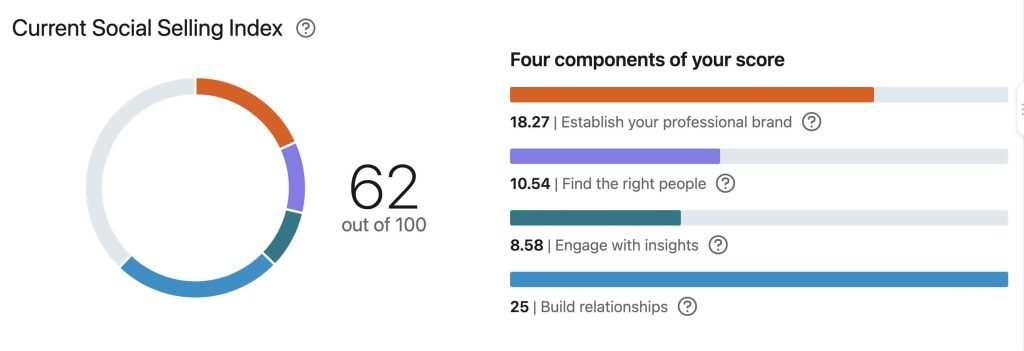
Social Selling Index (SSI): A measure of your social selling activities and effectiveness, often provided by platforms like LinkedIn.
Engagement rates: Track likes, comments, shares, and click-throughs on your social media posts.
Network growth: Monitor the expansion of your professional network and the quality of new connections.
Lead generation: Measure the number of leads generated through social selling activities.
Pipeline influence: Track how social selling activities impact your sales pipeline and deal progression.
To effectively measure and optimise your social selling performance:
Set clear goals and KPIs for your social selling programme
Use social media analytics tools to track performance across platforms
Conduct regular reviews to identify successful tactics and areas for improvement
Provide ongoing training and coaching to your sales team to enhance their social selling skills
Encourage knowledge sharing and best practices among team members
By continuously measuring and optimising your social selling efforts, you can ensure that your strategy remains effective and delivers a strong return on investment in 2025, and beyond.
Embracing social selling is crucial for sales teams looking to thrive in the digital-first landscape of 2025. By developing a strong social presence, effectively engaging with prospects, sharing valuable content, leveraging social intelligence, and continuously optimising performance, organisations can build stronger relationships with potential customers, shorten sales cycles, and drive significant revenue growth. As social platforms continue to evolve and play an increasingly central role in B2B interactions, mastering the art of social selling will be a key differentiator for successful sales professionals and organisations.
We hope that you found the 5 Proven Sales Strategies To Skyrocket Your Revenue in 2025article useful, if you would like help with your sales strategy, check out the MADjozi sales strategies offering, and set up a discovery call.