
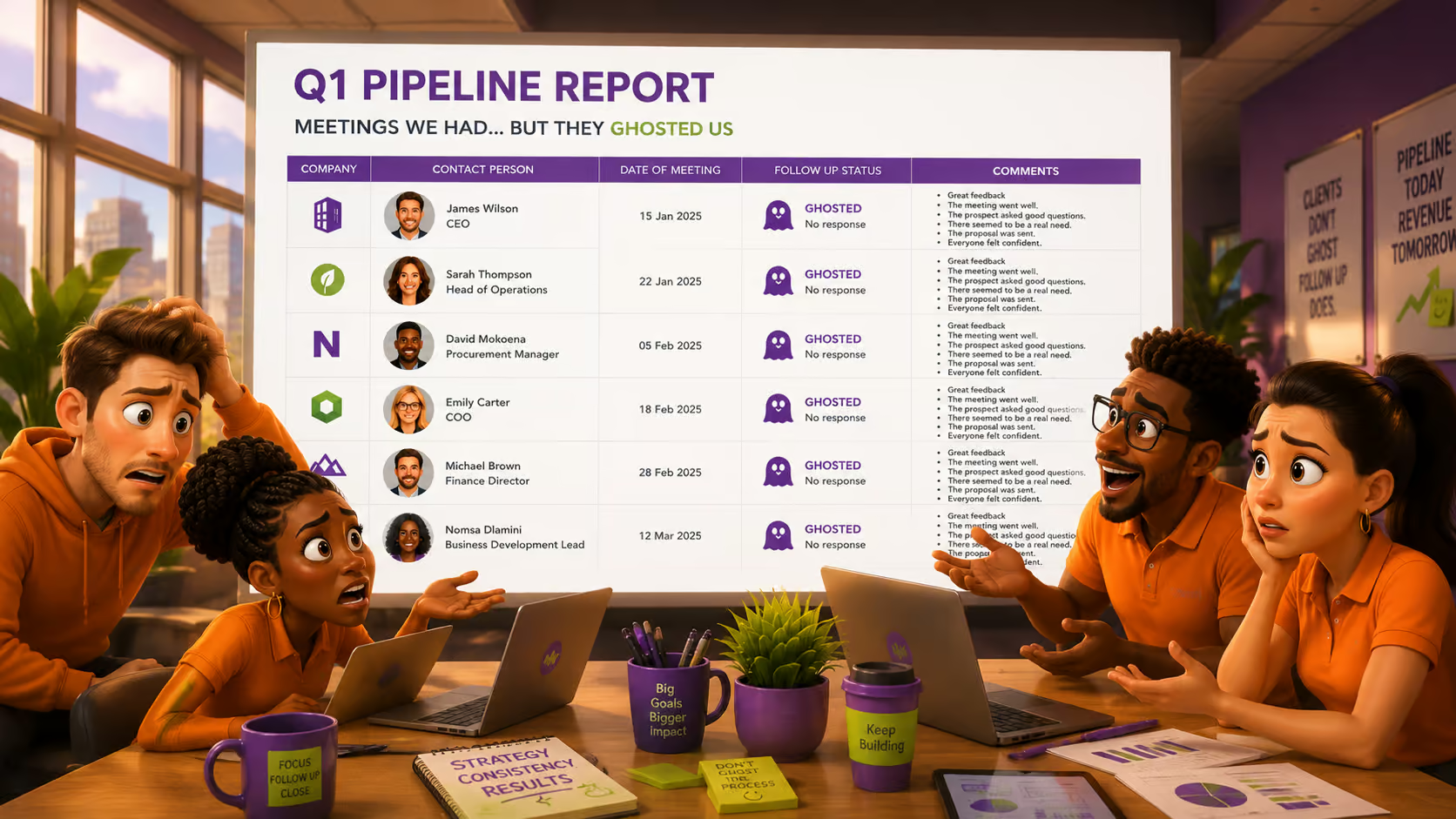
Most sales teams assume that when a prospect does not buy, the reason is price.
Sometimes that is true.
But often, price is only the easiest explanation.
A deal can look positive from the outside.
Then nothing happens.
Just silence.
When this happens, many sales teams start looking at the wrong part of the deal.
Those things may matter.
But in many B2B sales conversations, the real issue is risk.
Because before a buyer makes a decision, they are not only asking whether your solution looks good.
They are asking whether moving forward feels safe.
A prospect may like what you offer and still hesitate.
Choosing a supplier is not just a purchasing decision. It is a judgement call.
The buyer is asking:
Case studies, references, industry knowledge, relevant questions, and a clear understanding of the customer’s environment all help reduce this risk.
This is a skill that can be developed, overcoming objections and building credibility are core areas covered in our sales coaching programme.
The buyer needs to feel they are not taking a gamble.
Even when the current situation is not ideal, change still creates work.
A new supplier may mean new processes, new people, new systems, internal discussions, staff training, and disruption to the way things are currently done.
From the salesperson’s side, the solution may look obviously better.
From the buyer’s side, the change may feel uncomfortable.
That is why “doing nothing” is often a stronger competitor than another supplier.
Not because the buyer is happy with the current situation.
But because the current situation feels familiar.
Sales teams often think financial risk means the customer cannot afford the solution.
But affordability is only one part of it.
The bigger question is usually:
Will this investment be worth it?
Decision makers need to justify spend and if the value hasn't been articulated clearly enough, that becomes very difficult.
They need to feel confident that the return is clear, the value is understood, and the decision can be defended internally.
If the value has not been made clear enough, price becomes easier to object to.
Sometimes the issue is not that the solution costs too much.
It is that the buyer is not yet confident enough in the outcome.
In B2B sales, one interested person is rarely enough.
A deal can stall even when your main contact likes the solution.
Not because they were dishonest.
But because they could not get the decision through the business.
This is where many salespeople misread the situation.
They think they are selling to one person, when in reality they are selling into a wider decision-making environment.
If the internal stakeholders are not aligned, the deal can stop moving without anyone clearly saying no.
This is often the biggest risk, and the one that gets spoken about the least.
Every business decision affects someone’s reputation.
That is personal risk.
And personal risk is powerful.
Many buyers would rather delay a decision than be responsible for a poor one.
This is why trust matters so much in B2B sales.
The buyer is not only buying a product or service.
They are putting their name behind a decision.
If prospects are going quiet after positive meetings, the answer is not always to push harder.
It may be to understand what risk is still unresolved.
These questions create better sales conversations and that starts with understanding the full discovery process.
They also help explain why deals often stall even when there seems to be interest.
Because many sales teams think they are competing against another supplier.
Often, they are competing against uncertainty.
The businesses that win more opportunities are not always the cheapest, the biggest, or the most aggressive.
They are the ones that help buyers feel confident enough to move forward. If your team needs help developing these skills, explore our sales coaching programme."


2025 © All rights reserved | Developed By Ever Digital
